I Grew Up in This World
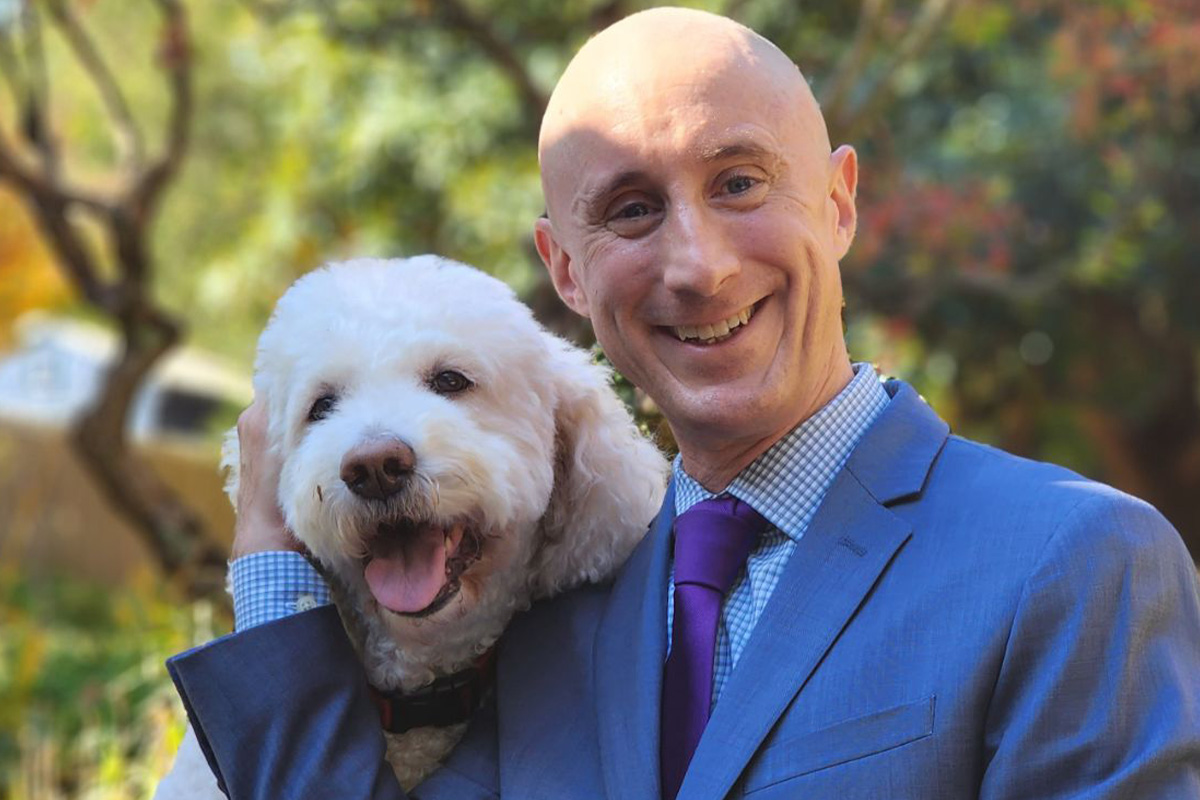
I’m Chris, co-founder of Boast, Occupational Therapist, Certified Aging in Place Specialist, and proud second-generation healthcare professional. I say second-generation because it matters to me. Healthcare wasn’t something I stumbled into. It was in my home. I watched what it meant to actually show up for people, and I wanted to do that too.
For years I worked directly with older adults, people navigating disability, recovering from injury, adjusting to diagnoses they didn’t see coming.
I loved that work. Still do.
There is something about helping a person stay safe and independent in the home they’ve lived in for thirty years that inspires me.
I gained a genuine appreciation for how environmental supports and barriers impact function that fundamentally changed my practice.
Home Modification: A Work In Progress
As an occupational therapist, I spent years helping people get stronger, move better and regain function. We worked on balance, transfers, mobility, endurance, and all the skills needed to live independently. But I kept seeing the same problem: people would make real progress in therapy and then return to homes that weren’t prepared to support that progress.
Problem 1: The Environment
Therapy can improve a person’s abilities, but it can’t remove environmental hazards.
If the bathroom is difficult to navigate, if the entryway creates a fall risk, or if everyday tasks require someone to work around obstacles, the home itself becomes the barrier. The work we do in therapy isn’t wasted, but it can only take someone so far when the environment is working against them.
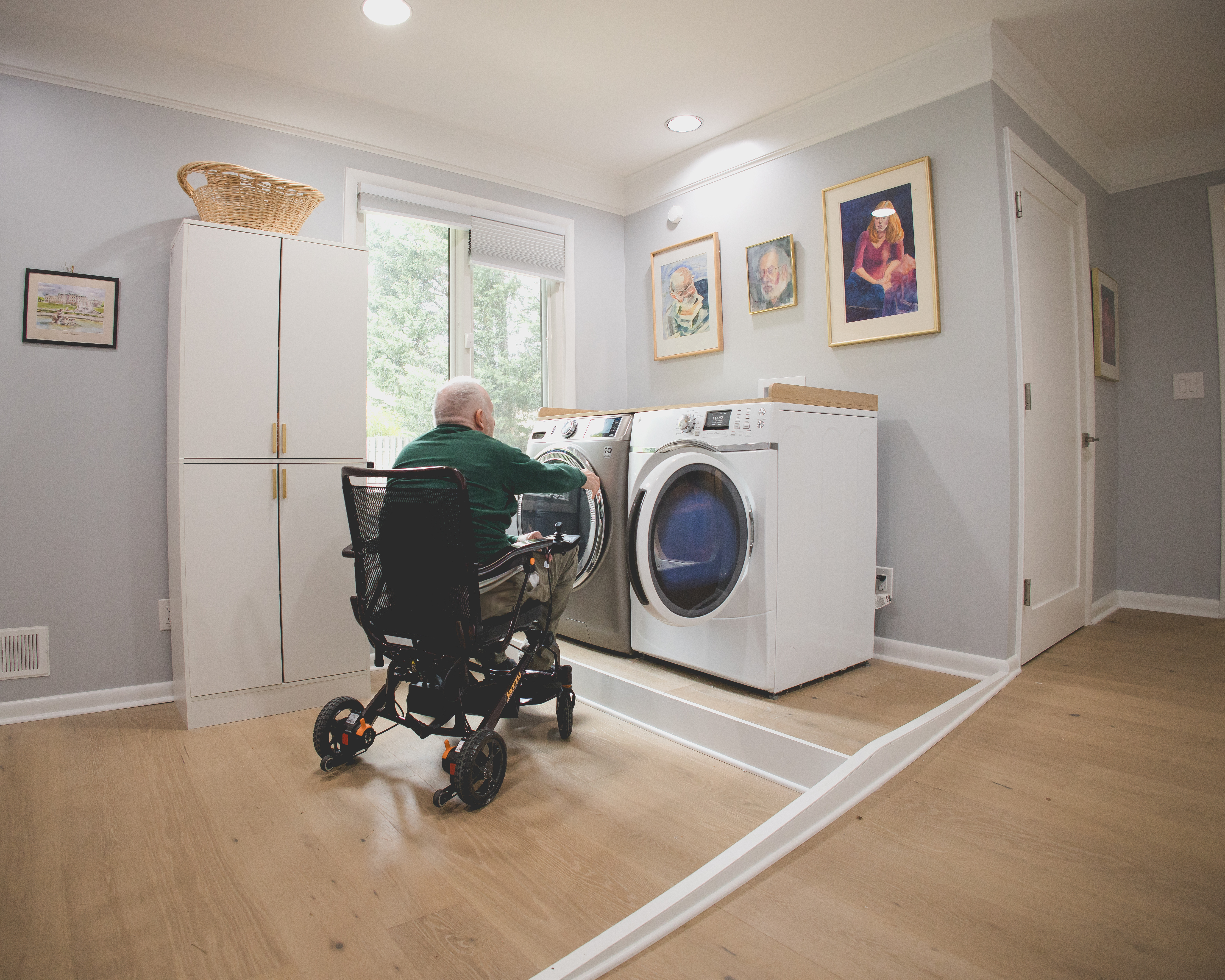
Safety and independence are not created by therapy alone. They happen when a person’s abilities and their environment work together. Most homes are not designed with every chapter of life in mind, which means adapting the home is often just as important as helping the person adapt to their circumstances.
Problem 2: The Modifications
True safety isn’t a one-size-fits-all solution. It requires a highly thoughtful approach tailored specifically to your unique living situation, medical specifications, and exact physical measurements.
I learned in this work that approximation isn’t good enough.
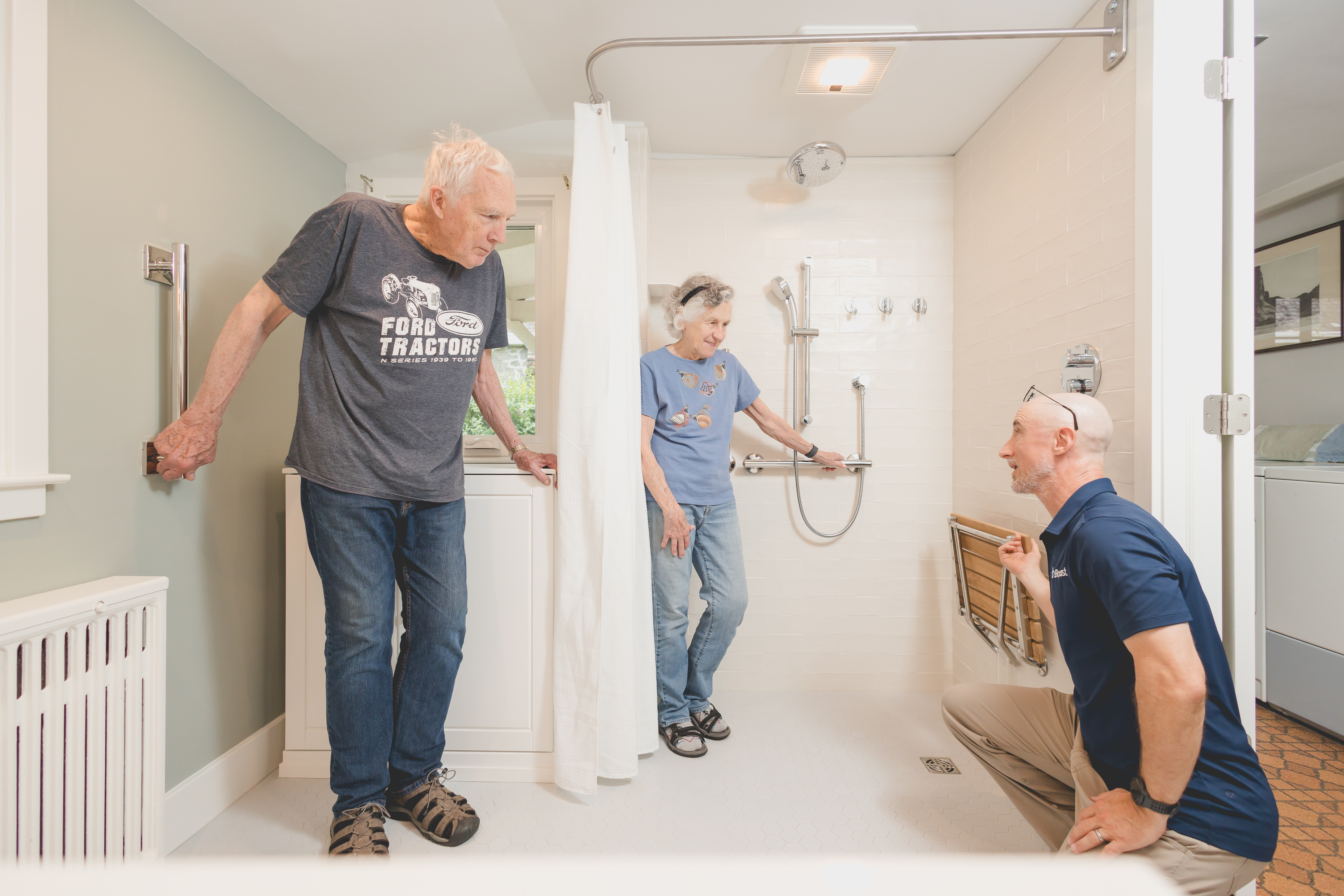
A grab bar installed an inch off from where it should be isn’t just cosmetic. It can be the difference between a save and a fall. For a grab bar to be impactful, it must be load-bearing, mounted with wall-blocking and in the exact location that specific person transfers.
This is safety. This is attention to detail. And it goes way beyond just the bathroom.
Problem 3: The Contractor
I used to refer OT clients to contractors. Some of them were genuinely skilled at their trade. But they were also stretched thin, covering too many jobs, showing up in a four-hour window that turned into the next day. Details got missed. Or worse, they got approximated.
It sounds simple enough, but a successful modification requires a level of precision and craftsmanship that most traditional contractors overlook. Meanwhile, other details aren’t considered in the absence of an expert in health and function who knows what to look for.
We have all seen it, the toilet paper holder hanging out of drywall, leftover by a rushed contractor focused on the new bathroom sink. In a standard home, that loose fixture is just a minor annoyance. But in an environment meant for aging in place, it represents a misunderstanding of natural human behavior.
When someone loses their balance in the bathroom. It happens fast. They reach for whatever is closest, and that is not always a grab bar. Maybe a towel bar, the vanity, the toilet paper holder.
And it pulls right out of the wall.
The fixture was installed the way it always gets installed. The problem is that nobody stopped to ask: What will this person actually grab in a moment of panic? What surfaces are they using to move through this room every single day?
We are not just installing handrails, ramps and safety equipment, we are ensuring your home is a safe space, whether you’re next to a grab bar, the toilet paper holder or kitchen cabinet.
Why Boast
To say it plainly: I wished something like Boast existed before I started it.
I wasn’t underwhelmed by the contractors I worked with. I was underwhelmed by the model. The handoff. The gap between clinical assessment and execution. Because honestly, one of the most powerful ways I have ever seen someone’s function and quality of life improve is through a well-designed environment. And getting that right requires occupational therapy, construction, and design working as one process.
Not a referral chain. Not a checklist handed off at the door.
That is why when I co-founded Boast, I made sure everything started with a full understanding of the human. We look closely at mobility, fall risk, neurological factors, vision, stamina, and what health and function might look like in the years ahead. We bring that exact same depth to our understanding of the home, walking through the space alongside you and your caregivers. With this complete picture and the collaborative input from our designer, I know we can finally provide what I have always been seeking for my patients. It is human-centered engineering, delivered with true craftsmanship and precision, providing a safe, functional, and more joyful home for years to come.
If you’re thinking about what your home might need, for yourself, a parent, a family member, we offer a free home evaluation. We’re always happy to take a look.
Frequently Asked Questions
What does an aging in place contractor do?
An aging-in-place contractor helps people remain safe, comfortable, and independent at home through thoughtful modifications including grab bars, accessible bathrooms, ramps, wider doorways, better lighting, and stair solutions. The goal is reducing fall risk and building a home that actually supports how you live.
At Boast, we go a step further by approaching construction through an occupational therapist’s lens. That means modifications aren’t just installed correctly, they are designed around the specific person who will use them.
What is a CAPS certification?
A Certified Aging in Place Specialist (CAPS) has completed specialized training through the National Association of Home Builders focused on accessibility, aging-in-place design, and home modification best practices. It bridges construction knowledge with an understanding of how aging affects mobility and function. I pair that credential with my background as an OT, which means the clinical picture and the built environment are always considered together.
How do I know if my home is safe for aging in place?
Most people don’t think about it until something happens…a fall, a diagnosis, a close call. Some warning signs worth paying attention to:
- Trouble getting in or out of the bathtub
- Relying on furniture or walls to move through the house
- Difficulty on stairs
- Problems with balance, especially in the bathroom
- Doorways that feel too narrow
- Tripping on thresholds
- Difficulty reaching items in high or low cabinets
- Areas of the home that feel like a hazard after dark
A proper assessment looks at both the person and the home together. That’s where you get answers that actually hold.
Why does it matter that an occupational therapist is involved?
OTs are trained to understand how someone actually functions: how they move, where fatigue sets in, what a diagnosis is likely to mean over time. Without that picture, you’re modifying a house. With it, you’re designing for a life.
What home modifications reduce fall risk?
It depends on the person and the home, which is exactly the point. Common starting places include grab bars in bathrooms, improved lighting, removing tripping hazards, adding blocking in walls for future support, ramp or threshold solutions at entries, and stair modifications. But the most effective plan starts with understanding how a specific person moves through their specific space.